When Graphs Meet Medicine: The Computational Revolution in Drug Interaction Prediction
Sep 17, 2025
How mathematical graph theory meets molecular biology to unlock drug interaction patterns invisible to traditional analysis.
The transformation of drug interaction prediction from a purely empirical science to a computationally driven discipline represents one of the most significant advances in modern pharmacology. At the heart of this revolution lies a powerful insight: drugs and their interactions can be represented as interconnected networks, where mathematical graph theory meets molecular biology to unlock patterns invisible to traditional analysis.

Graph Neural Networks have emerged as the vanguard of this transformation. These sophisticated algorithms represent molecular structures as graphs, with atoms serving as nodes and chemical bonds as edges. This representation captures something fundamental about drug behavior — the topological information that determines how molecules interact with biological systems. Unlike previous methods that relied on predefined features, GNNs learn directly from molecular structure, discovering patterns that human experts might never identify.
The superiority of graph-based methods becomes apparent when considering their performance metrics. Where traditional machine learning approaches might achieve moderate accuracy in predicting interactions, Graph Convolutional Networks, Graph Attention Networks, and Message Passing Neural Networks consistently demonstrate superior performance. These variants each bring unique strengths: GCNs excel at capturing local structural patterns, GATs can focus on the most relevant molecular features, and MPNNs effectively propagate information across molecular graphs to build comprehensive drug representations.
Knowledge Graphs: Integrating the Biomedical Universe
Beyond individual molecular structures lies an even richer source of information: the vast web of relationships connecting drugs, proteins, diseases, and biological pathways. Knowledge graph approaches have revolutionized DDI prediction by integrating these heterogeneous data sources into unified computational frameworks.
Consider the scale of modern biomedical knowledge graphs. Resources like Bio2RDF contain approximately eleven billion triples spanning thirty-five biomedical databases. These massive networks encode relationships between drugs and their targets, documented interactions, disease associations, and protein networks. By leveraging these semantic relationships, knowledge graph methods can make predictions that would be impossible using molecular structure alone.

The power of knowledge graphs lies in their ability to incorporate multi-modal information. A drug’s potential for interaction isn’t determined solely by its chemical structure but also by its metabolic pathways, protein targets, and physiological effects. Knowledge graphs capture these diverse relationships, enabling prediction systems to reason across different biological scales and mechanisms.
However, this wealth of information comes with significant challenges. Real-world knowledge graphs are inherently noisy, incomplete, and sometimes contradictory. Automatically constructed graphs may contain systematic errors that compound throughout the prediction pipeline. Processing such large-scale graphs demands substantial computational resources, and filtering signal from noise remains an ongoing challenge that limits the practical application of these powerful methods.
The Hypergraph Frontier
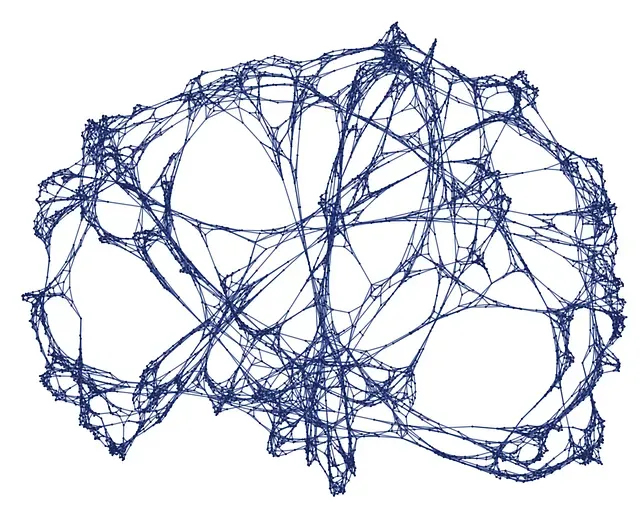
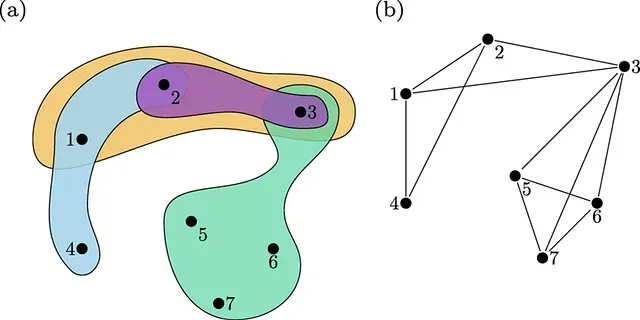
Traditional graphs, despite their sophistication, suffer from a fundamental limitation: they can only represent pairwise relationships. Yet biological systems rarely operate through simple binary interactions. When three or more drugs interact within the same metabolic pathway, or when multiple medications compete for the same set of enzymes, pairwise representations fail to capture the full complexity of these higher-order relationships.
Hypergraph neural networks address this limitation by generalizing traditional graphs to allow edges that connect multiple vertices simultaneously. This seemingly simple extension has profound implications for drug interaction prediction. Hypergraphs can naturally represent scenarios where multiple drugs interact through shared metabolic pathways, compete for the same transporters, or collectively influence complex biological processes.
Recent advances in hypergraph-based DDI prediction have demonstrated remarkable success. Methods like SPARSE employ sparse hypergraph neural networks to learn multiple potential drug combinations simultaneously, while HyGNN generates drug representations through hyperedge embeddings that capture these complex multi-drug relationships. These approaches represent the current frontier in DDI prediction methodology, offering capabilities that align more closely with the biological reality of drug interactions.
The advantages of hypergraph approaches extend beyond theoretical elegance. In practical terms, they enable predictions for polypharmacy scenarios that more accurately reflect clinical reality. When a patient takes five or six medications simultaneously, the relevant question isn’t just how each pair might interact, but how the entire combination might behave as a system. Hypergraphs provide the mathematical framework to address this critical question.
Confronting Current Limitations
Despite these advances, significant challenges persist in computational DDI prediction. The cold-start problem remains particularly vexing. When pharmaceutical companies develop new drugs, prediction systems face a paradox: they need historical interaction data to make accurate predictions, yet no such data exists for novel compounds. This limitation becomes progressively more severe across different scenarios, from predicting interactions between new and existing drugs to anticipating entirely novel interaction mechanisms.

Current methods typically see their performance degrade dramatically when confronting cold-start scenarios. On standard benchmarks, accuracy might drop from over ninety-five percent for well-characterized drugs to barely above eighty percent for completely novel compounds. This performance gap represents more than a technical limitation — it’s a fundamental barrier to applying DDI prediction in drug development, where guidance is most critically needed for new therapeutic candidates.
The challenge of interaction type classification presents another crucial limitation. While most research has focused on binary prediction — simply determining whether drugs interact — clinical practice demands more nuanced information. Healthcare providers need to know not just that an interaction might occur, but what type of interaction to expect. Will it be a minor effect requiring monitoring, or a severe interaction necessitating immediate intervention? Current systems largely fail to provide this critical distinction.
The computational complexity of advanced methods creates practical barriers to implementation. Healthcare institutions require prediction systems that can operate efficiently with readily available data, yet many cutting-edge approaches demand extensive computational resources or rare biological datasets. This gap between theoretical capability and practical accessibility limits the real-world impact of even the most sophisticated prediction methods.
The Promise and Peril of Scale
As pharmaceutical databases grow and computational methods become more sophisticated, we face both unprecedented opportunities and mounting challenges. The sheer volume of potential drug combinations grows exponentially with each new medication approved. With thousands of drugs in clinical use, the number of possible pairwise interactions reaches into the millions, while higher-order combinations number in the billions.

This combinatorial explosion means that experimental validation of all possible interactions remains forever out of reach. We must rely increasingly on computational predictions, yet these predictions must achieve exceptional accuracy to be clinically useful. A false negative — failing to predict a dangerous interaction — could cost lives, while excessive false positives could restrict access to beneficial drug combinations.
The integration of diverse data sources compounds these challenges. Modern prediction systems must reconcile information from molecular databases, clinical trial results, electronic health records, and scientific literature. Each source brings its own biases, errors, and incompleteness. Creating unified frameworks that can effectively leverage this heterogeneous information while maintaining prediction accuracy remains an active area of research.